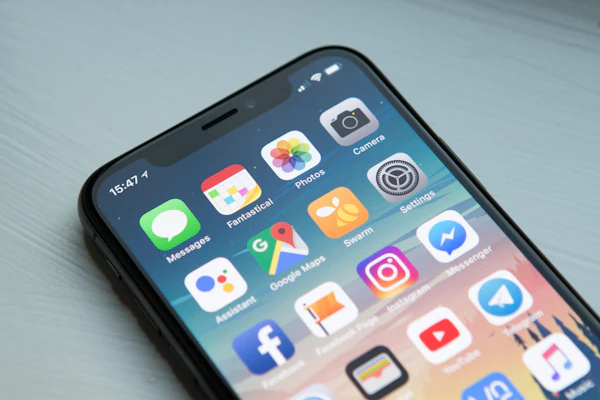
When a homeowner's AC dies in summer heat, they search "emergency HVAC near me" on their phone right now. They're not waiting. If your website doesn't show up in the first three results, they call your competitor. Every time.
Most HVAC websites are bleeding leads because of five or six fixable problems. Not because the business isn't good, but because Google doesn't see the site as the answer. This audit walks through what to check, why it matters, and what gets HVAC sites in front of customers who actually call.
The quick verdict: Your Google Business Profile is incomplete
If you're not ranking in local search, start here. About 68% of HVAC websites have incomplete or poorly optimized Google Business Profiles. The profile is where Google learns what you do, where you work, and whether customers trust you. A half-finished profile is like showing up to a job site without your tools.
Businesses with complete GBP listings get seven times more clicks than those with gaps. If you've claimed your profile but haven't filled every field, you're leaving lead traffic on the table.
Google Business Profile: The foundation of local HVAC search
Your GBP is the first place Google shows your business in local search results. The Map Pack—those three business listings at the top with a map—gets 42% of all local search clicks. Being the top result there matters more than being number one in the organic results below.
Here's what most HVAC contractors miss:
- Wrong category selected. You picked "Contractor" when you should have "HVAC Contractor" or added secondary categories like "Air Conditioning Repair" and "Heating Installation." Google uses categories to match your business to specific searches.
- Service descriptions are thin. Listing "HVAC services" is generic. Instead, list each service: "emergency AC repair," "water heater installation," "commercial HVAC maintenance." Google indexes these for keyword matching.
- No posts or photos. Google rewards recent activity. Posting 1-3 times per week (photos or service updates) tells Google your business is active. Posts expire after 7 days, so consistency beats volume.
- Incomplete NAP. Your Name, Address, and Phone should match exactly across Google, your website, and directories like Yelp and HomeAdvisor. Even a typo ("Suite 200" vs "Ste 200") signals inconsistency to Google.
- No reviews or ignoring them. A business with 30 recent reviews ranks higher than one with 150 stale reviews. Respond to every review, positive or negative. This shows you're engaged.
Spend 30 minutes this week updating your GBP: verify your category, fill in every service you offer, add real photos of your team and jobs, and respond to any pending reviews. Then commit to 1-2 posts per week going forward.
Site speed and mobile: Where most HVAC leads disappear
Over 80% of HVAC searches happen on mobile. Someone's AC just broke, they pull out their phone, and they need to see a phone number and "Book Now" button in under 3 seconds. If your site takes 5 seconds to load, they're calling the next guy.
Google's Core Web Vitals are a confirmed ranking signal. These measure three things: how fast your page loads (LCP—target under 2.5 seconds), how fast it responds to clicks (INP—target under 200 milliseconds), and how stable the layout is (CLS—target under 0.1).
44% of HVAC websites fail at least one Core Web Vital. Many fail all three. The result: Google shows you lower in search, and customers who click bounce before the page loads.
Common culprits on HVAC sites:
- Unoptimized hero images (10+ MB images instead of 200-400 KB)
- Third-party scripts (review widgets, chat, tracking) running uncompressed before the page is interactive
- Mobile navigation that doesn't work until JavaScript loads (buttons too small, forms that overlap)
- Heavy sliders or auto-playing videos on the homepage
- Hosting that's slow in your region (if you're in Denver but your host is in Europe, pages are slow for local customers)
Test your site in Google PageSpeed Insights (free). If you're in the "Poor" or "Needs Improvement" category, site speed is costing you calls.
Missing schema markup and structured data
Schema markup tells Google what information is on your page. For HVAC businesses, the most important schemas are LocalBusiness (your address and phone), Service (what you offer), and Organization (your business name and logo).
About 38% of HVAC websites are missing local schema entirely. Without it, Google has to guess what your services are and where you're located. That's uncertainty it doesn't need—so it ranks a competitor instead.
Add this to your site's homepage (your developer can do this in 15 minutes):
- LocalBusiness schema with your business name, phone, address, and service areas
- Service schema for each major service (AC repair, heating installation, maintenance)
- Organization schema with your logo and business description
If you use WordPress, Yoast SEO or All in One SEO will generate this for you. Otherwise, your developer can add it as JSON-LD in the `
` of your pages.Review strategy: Building trust that Google sees
Google measures review velocity—how many new reviews you get per month. A business getting 15-20 reviews monthly outranks one with 200 stale reviews from two years ago. Why? Fresh reviews signal active, trusted service.
Most HVAC contractors don't ask for reviews systematically. You finish a job, the customer's happy, and then nothing. Next week you've forgotten to ask, and so has the customer.
Build a review system:
- Send review requests via text or email within 24 hours of job completion
- Ask customers to leave Google reviews specifically (not just Yelp or Facebook)
- Target 15-20 reviews per month—consistency beats quantity
- Respond to every review, even negative ones, within 48 hours
A customer who leaves a negative review doesn't expect a response. When you respond professionally and solve the problem, Google sees engagement. That signals authority more than the review rating itself.
What most HVAC businesses get wrong
- Thinking SEO is only about keywords. You're optimizing for "emergency HVAC Denver," but half the battle is the technical stuff—site speed, mobile layout, schema markup. These don't show up in copy, but they show up in rankings.
- Publishing thin blog content. "5 Signs Your AC Needs Repair" is a start, but if it's 300 words with no depth, Google's helpful-content filter penalizes it. Aim for 1,500+ words on topics customers actually search for.
- City pages as spam instead of value. If you're targeting "HVAC Denver," "HVAC Aurora," "HVAC Boulder," every city page should answer real questions specific to that location. Generic pages for 50 cities dilute your authority. Stick to 20-25 city pages, max.
- Ignoring GBP and website as separate. They're connected. Your website's content feeds signals to your GBP. A city-specific landing page on your website makes your GBP stronger for that location. A strong GBP drives traffic to your website. Treat them as one system.
- Not measuring what matters. Vanity metrics like "organic traffic" can hide the truth. What matters: phone calls booked, service jobs closed, leads qualified. Track these in Google Analytics with conversion goals. If you're getting traffic but no calls, the problem isn't traffic—it's landing page design or a wrong phone number.
The bottom line: Your audit timeline and next steps
If you're auditing your HVAC website right now, here's the order to fix things:
- Week 1: Audit and complete your Google Business Profile (categories, services, photos, NAP)
- Week 2: Test your site speed in PageSpeed Insights. If you're below 50, fix images and remove heavy scripts
- Week 3: Audit your mobile experience. Open your site on your phone. If anything requires pinch-zoom or the phone button isn't obvious, it's a problem
- Week 4: Add schema markup to your homepage and top service pages. Have your developer verify it in Google's Structured Data Tester
- Ongoing: Build a review request system. Send one within 24 hours of every job completion
You'll see small ranking movements in 30 days, noticeable shifts in 60-90 days. Major wins—competing for the top three spots—take 3-6 months if you stay consistent.
The best time to audit was last year. The second best time is this week.
Want this handled for you?
A full SEO audit plus implementation takes months to do right. RankLoft has audited 100+ HVAC websites and knows exactly which fixes move the needle. Get a detailed audit, a prioritized action plan, and someone to execute it.
Get a free site audit →Frequently asked questions
How long does it take to see SEO results from fixing these issues?
Most HVAC contractors see small improvements within 30 days, noticeable changes in 60-90 days, and significant ranking shifts over 3-6 months. Timeline depends on how many issues you fix and how competitive your market is.
Is Google Business Profile more important than my website for local search?
Both matter, but Google Business Profile signals drive about 32% of your local rankings. Your website feeds SEO signals to your GBP, so they work together. A great GBP with a slow, mobile-unfriendly website will still lose to a competitor with both optimized.
What's the difference between page speed and Core Web Vitals?
Page speed is how fast your pages load overall. Core Web Vitals measure three specific things: LCP (how fast content appears), INP (how fast the site responds to clicks), and CLS (how stable the layout is). Good Core Web Vitals help your rankings.
Do I need to hire a professional to audit my HVAC website SEO?
You can start with free tools like Google Search Console to spot technical issues. But a professional audit catches things DIY tools miss—schema markup, citation consistency, content gaps specific to HVAC competitive keywords. Most contractors get a positive ROI hiring someone for an initial audit.
How often should I re-audit my HVAC website for SEO?
Quarterly is a good pace to catch new issues. Run a search-console-based audit every month, but a full deep-dive every 3-4 months. After major changes (new pages, redesign, hosting switch), do an audit within a week.
Sources
- Plumbing Webmasters — HVAC SEO: Guide To Top Rankings (Updated for 2026)
- Google Search Central — Understanding Core Web Vitals and Google search results
- HouseCall Pro — 14 HVAC SEO Tips to Rank Higher in 2026
- W3Era — Core Web Vitals Guide 2026: LCP, CLS & INP Explained + How to Fix
- ALM Corp — Google Local Services Ads: Complete Guide to Setup, Cost, Ranking Factors, Reviews, and Better Leads
- ServiceTitan — 11 HVAC SEO Tips to Skyrocket Your Rankings in 2026